Genogram Basics
Cultural heritage patterns: representing diversity in genograms
Quick answer
In our increasingly diverse world, families often span multiple cultural backgrounds, ethnicities, and traditions. GenogramAI’s cultural heritage pattern system allows practitioners to visually represent this diversity with sensitivity and accuracy.
The heritage pattern system
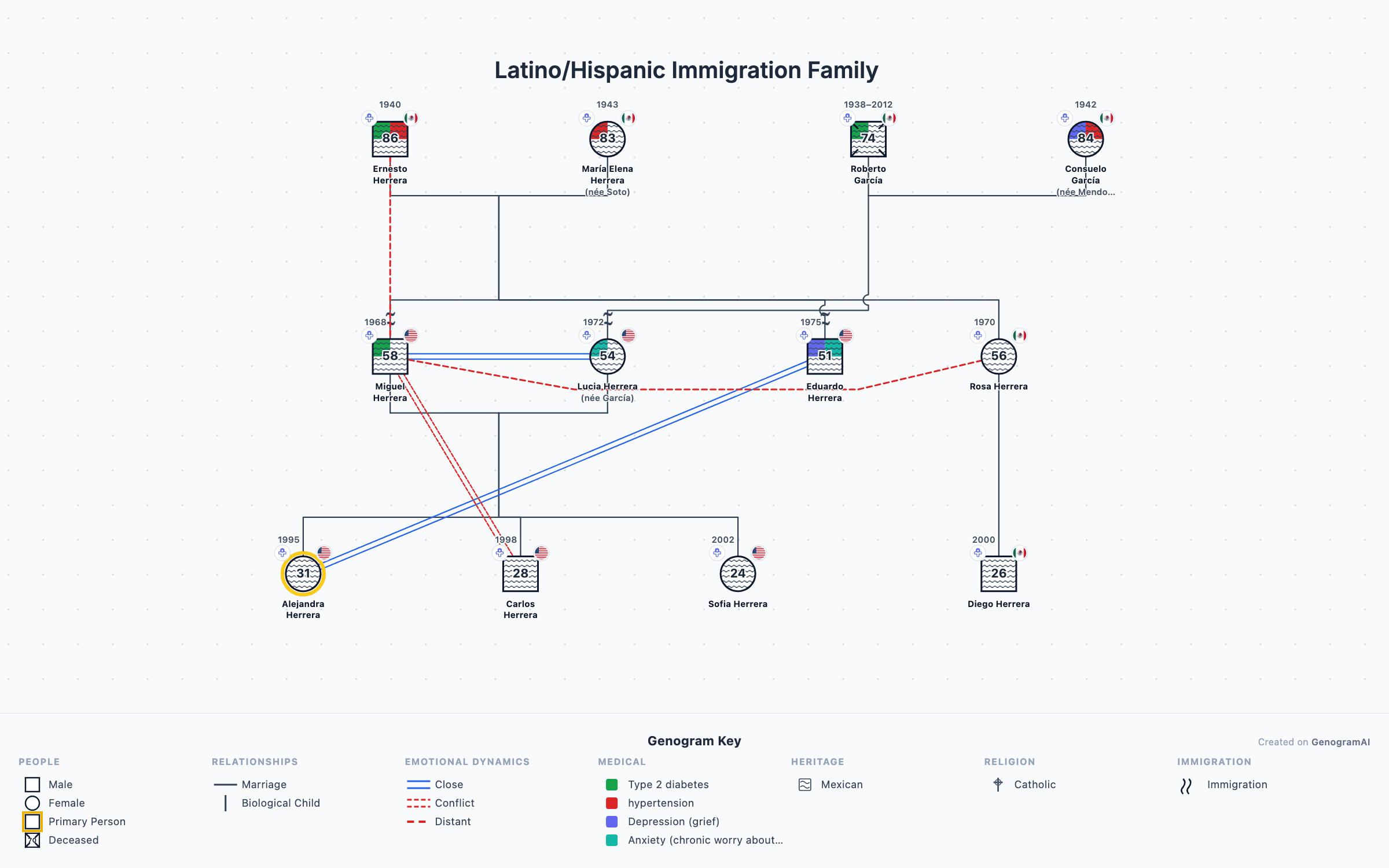
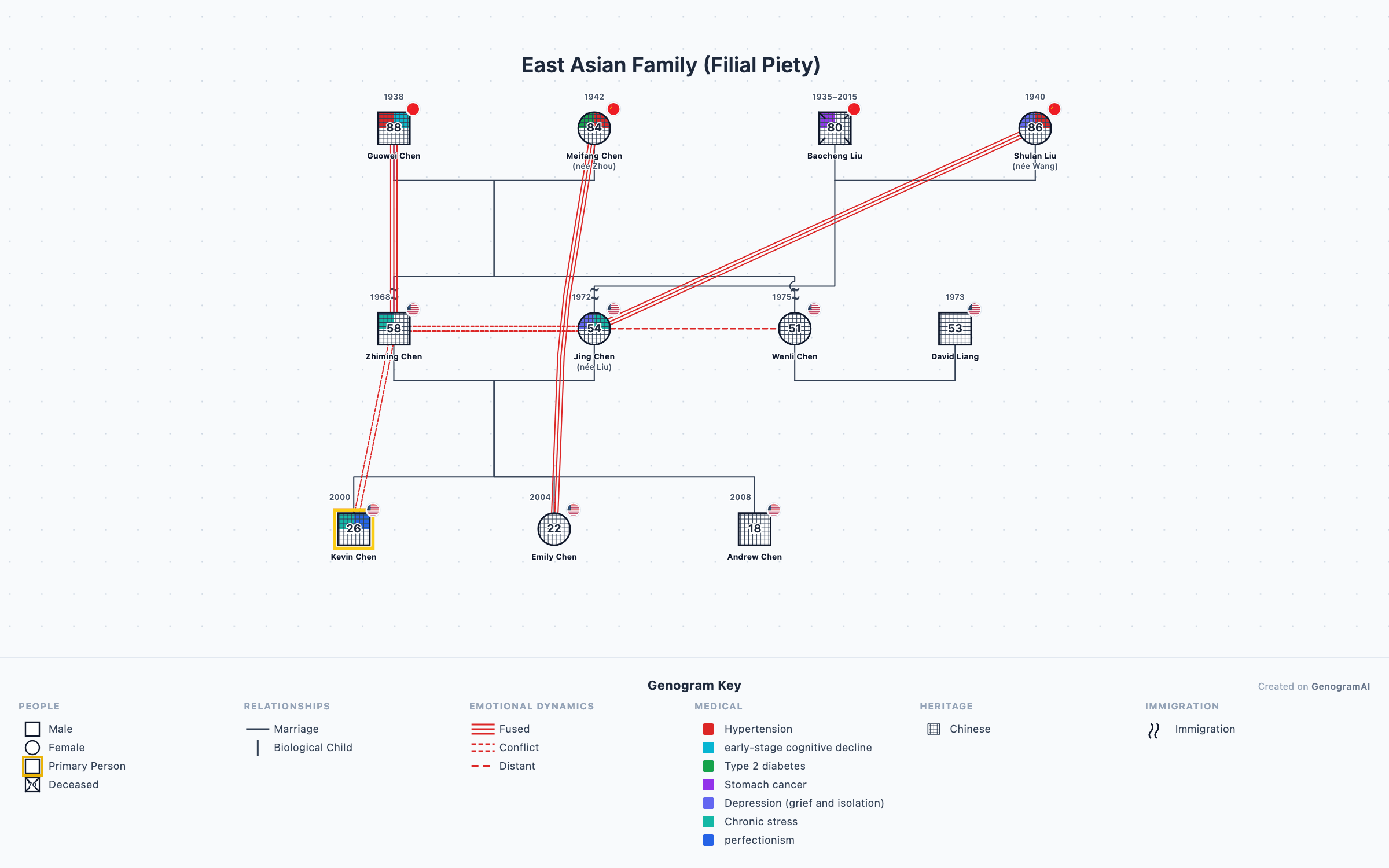
GenogramAI offers 9 heritage fill patterns that can be applied to person symbols. Each pattern carries a label you choose (for example “Irish” or “Mexican”), and a person can carry more than one pattern for dual or multi-heritage. The labels feed the genogram’s legend.
- Horizontal lines
- Vertical lines
- Diagonal right
- Diagonal left
- Crosshatch
- Dots
- Waves
- Braid
- Checkerboard
- Zigzag
- Diamonds
Best practices for cultural representation
1. Consistency within genograms
Once you assign a pattern to a cultural heritage, use it consistently throughout the genogram. This creates a clear visual language that clients can easily understand.
2. Let clients self-identify
Cultural identity is personal and complex. Rather than making assumptions based on surnames or appearance, ask clients how they identify culturally. Some may identify with multiple heritages or use terms different from what you might expect.
Important consideration
3. Multicultural individuals
For individuals with multiple cultural backgrounds, you can:
- Assign two or more patterns to the same person (one for each heritage)
- Use the dominant cultural identification
- Add notes explaining the complexity
4. Creating a legend
Always include a legend with your genogram explaining what each pattern represents. This ensures the visual representation is meaningful to anyone reviewing the document.
Clinical applications
Cultural context in therapy: visualizing heritage helps explore how it influences
- Family communication styles
- Expectations about gender roles
- Attitudes toward mental health treatment
- Intergenerational relationships
- Religious and spiritual practices
Colour and print guidelines
Patterns carry the heritage information, so a genogram still reads in black and white. If you also use colour (GenogramAI lets you give a person a custom outline colour with its own legend label), consider these guidelines:
- Avoid using colors with negative connotations in certain cultures
- Consider national or cultural color associations
- Use high-contrast combinations for print readability
- Be consistent across all your genograms for easier comparison
Sensitivity considerations
Cultural humility
- Approach cultural documentation as a learner, not an expert
- Recognize that culture is dynamic and evolving
- Ask about the significance of cultural identity to the client
- Be prepared to revise based on client feedback
- Acknowledge when cultural differences impact therapy
Conclusion
Cultural heritage patterns in GenogramAI provide a powerful visual tool for representing family diversity. When used with cultural sensitivity and client collaboration, they enrich the genogram with meaningful context that supports more effective therapeutic work. Remember that the goal is not just documentation, but honoring the rich tapestry of human cultural experience.
Frequently asked questions
How do you show culture or ethnicity on a genogram?
Assign each cultural heritage a fill pattern on the person symbols and label it in a legend, for example horizontal lines for Irish and dots for Mexican. Keep each pattern consistent across the genogram, let clients name their own heritage, and add notes where identity is more complex than one label.
How do I show a person with more than one heritage?
Give the person two or more patterns. GenogramAI supports dual and multi-heritage on a single person, with a label for each pattern. You can also record the heritage the client most identifies with and add a note explaining the complexity.
Is cultural heritage the same as race on a genogram?
No. Heritage is about cultural identity and tradition, which can differ from ancestry or race. A person may have Japanese ancestry and identify culturally as American. Ask the client how they identify and let them guide the representation.